Mastering the Times Table Chart: Your Essential Guide to Multiplication Fluency
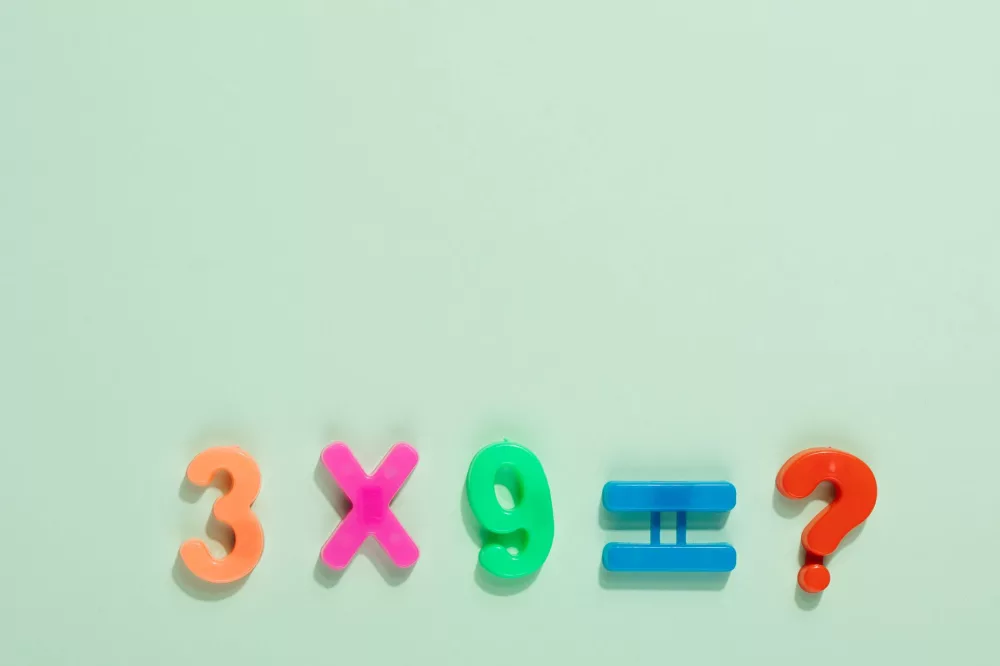
Hello, Multiplication Explorer! Let's Talk Times Tables!
So, you’re here to really dig into the world of times table charts, huh? That’s awesome! I mean, honestly, when we talk about fundamental math skills, the multiplication table – often just called the times table chart – stands out as a true cornerstone. It's not just a collection of numbers; it's a foundational tool that empowers individuals, young and old, to tackle more complex mathematical concepts with confidence. I genuinely believe that a solid grasp of these basic facts can unlock a whole new level of mathematical thinking for anyone. It's kinda like learning the alphabet before you can read a book, right?
We often underestimate just how much impact knowing our times tables quickly and accurately can have. Think about it: from calculating groceries to understanding budgets, or even just playing a board game, multiplication pops up everywhere. It’s an everyday superpower, really. And the times table chart? That’s your training manual, your secret weapon for acquiring that superpower.
What Exactly Is a Times Table Chart?
At its heart, a times table chart is a visual representation of multiplication facts. You'll typically see it presented as a grid or a table, showing the product (the answer) of two numbers being multiplied together. Most commonly, people refer to the 12x12 chart, which lists products for numbers from 1x1 all the way up to 12x12. Each row and column represents a multiplier, and where they intersect, you find the result.
For instance, if you look at the row for '3' and the column for '4', you'll find '12'. That tells you 3 multiplied by 4 equals 12. Simple, right? But the magic isn't just in seeing the answers; it's in internalizing them, making them second nature. That's what we're aiming for here.
A Peek into History: Where Did These Tables Come From?
You know, it’s kinda cool to think that the concept of multiplication tables isn't some newfangled thing. It’s been around for centuries! The earliest known multiplication table, believe it or not, comes from the Babylonians, dating back over 4,000 years. Imagine that! They used a base-60 numeral system, which is a bit different from our base-10 system, but the core idea was there.
Later on, the ancient Greeks, particularly Pythagoras (yes, that Pythagoras of the Pythagorean theorem fame!), are often credited with popularizing the multiplication table. The 'Pythagorean table' was commonly used for teaching in antiquity. So, when you're looking at one of these charts today, you're actually tapping into an educational tradition that's incredibly ancient and has served countless generations.
Why Bother? The Undeniable Benefits of Times Table Mastery
Okay, so why is it such a big deal to memorize these things? Well, for me, the benefits are clear as day. First off, it significantly boosts your mental math abilities. When you know that 7x8 is 56 without having to think twice, you can solve larger problems faster. No more counting on fingers, no more struggling with basic calculations!
- Builds Confidence: There's a real sense of accomplishment, a confidence boost, that comes from knowing you've got these fundamental facts down. It makes approaching new math challenges feel less daunting.
- Frees Up Cognitive Load: This is a big one. When you don't have to spend mental energy figuring out 6x9, your brain is free to focus on the more complex steps of a multi-step problem. It’s like having a calculator built right into your mind, saving your mental RAM for the tricky stuff.
- Foundation for Advanced Math: Algebra, fractions, percentages, geometry – they all rely heavily on a strong understanding of multiplication. If you're shaky on your times tables, you'll find these later topics much harder to grasp. It's like trying to build a skyscraper on a wobbly foundation.
- Real-World Application: As I mentioned earlier, multiplication is everywhere! Budgeting, cooking (scaling recipes), shopping (comparing prices, calculating discounts), even just splitting a bill with friends – these everyday tasks become much easier.
Diverse Charts, Diverse Learners
You might think a times table chart is just a times table chart, but there are actually a few variations out there, each with its own charm:
The Standard Grid Chart
This is probably the most common one we all picture. It’s a square grid where you multiply the number in the top row by the number in the left-most column. It’s wonderfully efficient for showing all facts at once.
Montessori Dot Charts
Montessori education often uses more tactile and visual methods. Their multiplication charts might involve beads or dots to physically represent the groups being multiplied, making the abstract concept of multiplication more concrete for younger learners. It’s a very hands-on approach that I personally find fascinating.
Individual Fact Strips
Sometimes, rather than one big chart, you’ll find sets of strips or flashcards focusing on one table at a time (e.g., all the '4 times' facts). This can be great for breaking down the learning into smaller, more manageable chunks.
Strategies That Actually Work (From My Experience!)
So, how do we actually go about getting these facts into our heads? It's not always just about staring at a chart, though that's a start! Here are some strategies I’ve seen work wonders:
- Rote Memorization (with a caveat): Yes, repetition is key. Flashcards, repeating facts aloud, quick quizzes – these all help. But don't just memorize blindly; try to understand the concept too.
- Skip Counting: This is an awesome way to build towards multiplication. If you can skip count by 2s (2, 4, 6, 8...), you’re basically doing your 2 times table! Same for 3s, 5s, 10s, etc. I found this super helpful as a kid.
- Look for Patterns: Multiplication tables are full of cool patterns! The 9s table, for example, has digits that always add up to 9 (e.g., 9x3=27, 2+7=9; 9x8=72, 7+2=9). The 5s table always ends in a 0 or 5. Spotting these patterns makes learning way more engaging and less like a chore.
- Games and Songs: Seriously, turning learning into a game or a catchy song can make a huge difference. There are tons of online games, apps, and YouTube songs dedicated to times tables. Playful learning sticks better, I think.
- Visual Aids: Beyond the basic chart, think about arrays (rows and columns of objects), number lines, or even drawing pictures to represent multiplication problems. Seeing it visually helps solidify the concept.
- The Commutative Property: This is a fancy term for something simple: 3x4 is the same as 4x3. If you know one, you know the other! This immediately cuts down the number of facts you need to learn by almost half, which is a huge relief!
Tips for Parents and Educators
If you're helping someone learn their times tables, remember a few things. Patience is absolutely crucial. We all learn at different speeds, and some facts just click faster than others. Make it a positive experience; celebrate small victories!
Don't just drill; explain the 'why'. Show them how multiplication is repeated addition. Use real-life examples constantly. And hey, make it fun! A little encouragement goes a long way. I can tell you from personal experience that a positive learning environment makes all the difference in the world.
Overcoming Those Tricky Spots
Are there particular facts that always seem to trip people up? Oh, for sure! The 6s, 7s, 8s, and sometimes the 12s can be a bit challenging because they don't have as obvious patterns as the 10s or 5s. For these, I'd suggest focusing extra attention on flashcards, consistent practice, and maybe breaking them down even further. Try to make a little story or mnemonic for the toughest ones. For example, 7 times 8 is 56 – '5, 6, 7, 8' – it’s a silly little rhyme but it works for some!
Ultimately, a times table chart isn't just a poster for a classroom wall; it's a launchpad for mathematical literacy. Taking the time to truly master these facts is an investment that pays dividends throughout a person's life, opening doors to understanding more complex ideas and making everyday calculations a breeze. Let's embrace the journey and make multiplication mastery an exciting adventure!
About Editorial Team
Senior columnist and culture critic specializing in architectural designs, emerging high-growth systems, and contemporary philosophies.
All Categories
Recent Posts